
(17 March 2026) It is now 10 pm MST March 17, or, 5 AM GMT, March 18.
As of now, the Strait of Hormuz continues to be blocked. It has been blocked for 18 days. About 288 to 360 million barrels of oil have been removed from global oil supplies by Iran’s closing of the Strait of Hormuz.
The idea of the Second Signpost having started March 2 is still in play.
There are four stories tonight.
News Item 1: Asian Nations Get Hit Harder
This oilprice report says Asian nations are being hit hard by the Hormuz block because Arab Heavy and Arab Medium grade crude, which Asian nations like Japan refine, is being cut off.
The report summarizes that for nations like Japan, Taiwan and South Korea, “There are no viable replacements for Arab Heavy and Arab Medium in the near term, triggering a historic supply crisis if the conflict is not resolved in the coming weeks.”
Crude Oil: Sweet vs. Sour
For a little background information, sweetness and sourness of oil is determined by the amount of sulfur in it. Refineries are geared to take low, medium, or high sulfur oils, but not all three.
West Texas Intermediate (WTI) is the benchmark oil for sweet oils, from which those oils set there price to a large degree. Dubai crude is the benchmark for the Arab Heavy and Arab Medium sour oils.
A chart showing different grades of crude oil is shown below.
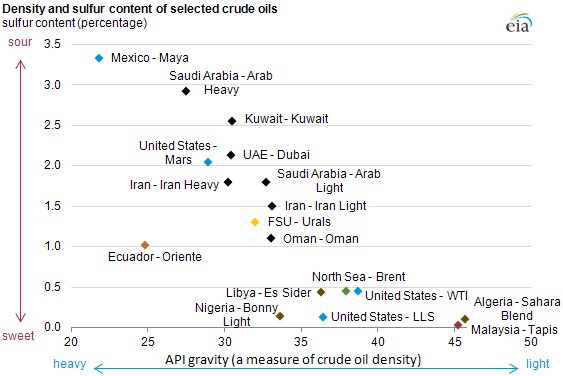
A chart comparing flavor and density of various crude oils. WTI and Dubai are benchmarks for price of sweet and sour, respectively.
News Item 2: Dubai Oil Much Higher Than WTI
Oilprice.com shows another angle as to how bad the Asian countries are being punished now. While WTI is priced in the mid-$90’s, Dubai is $130 per barrel.
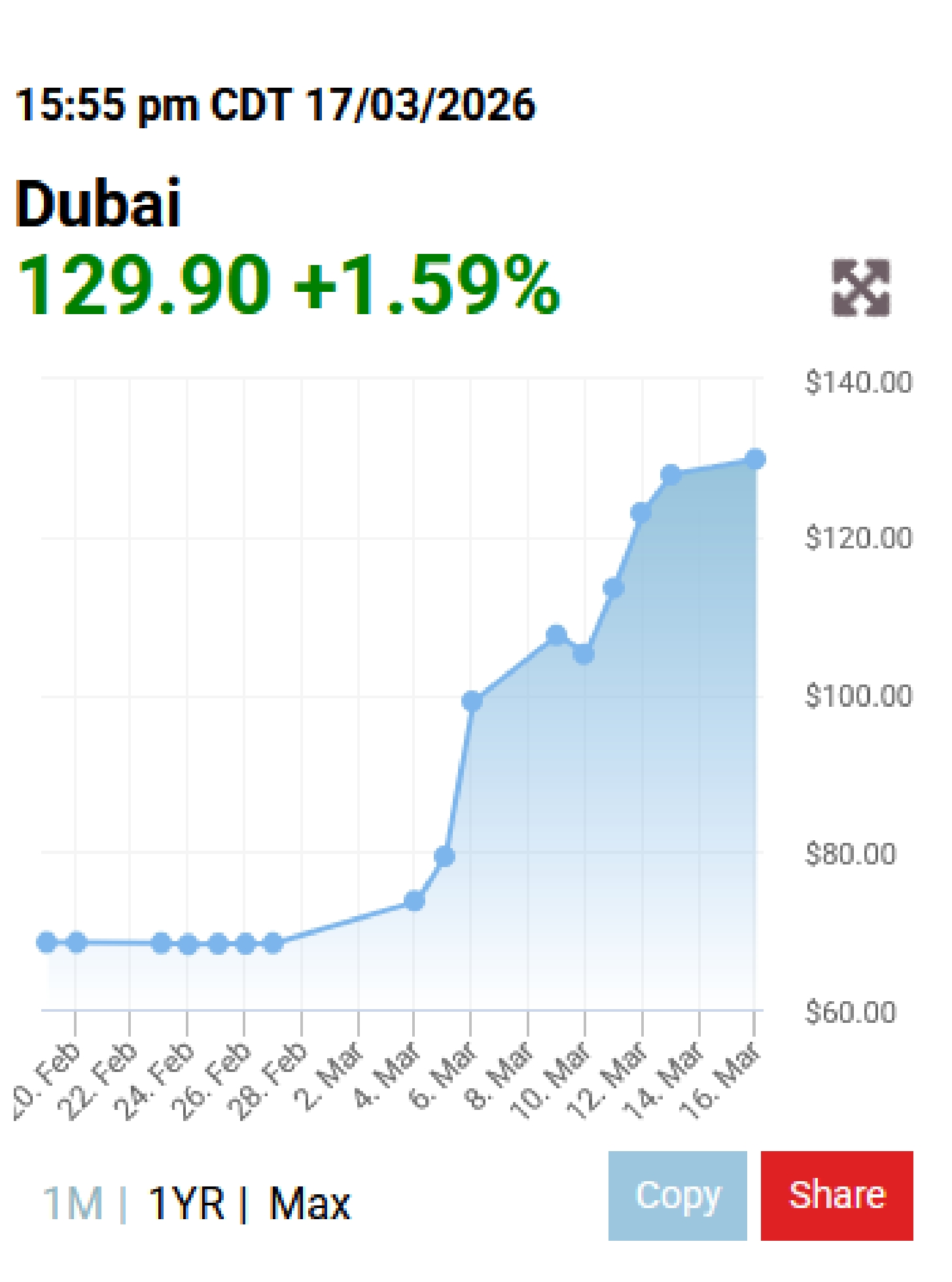
Dubai crude price on March 17, 2026 much higher than the price before the war started on February 28.
News Item 3: UAE’s Shah Gas Field on Fire
Oilprice.com reports that the Shah gas field in the UAE was attacked by IRGC drones and was on fire, though local authorities say they put the fire out. That gas field produces one-fifth of the UAE’s gas export.
The only port outside of the Strait of Hormuz, Fujairah, has been attacked several times and is not loading oil.
News Item 4: Basij Leadership Taken Out
This report from IranInternational says that, just as the IRGC leadership was taken out early in this war, the Basij leadership has now been taken out.
The Basij is the volunteer, paramilitary organization supporting the IRGC. It is the pool of manpower from which the IRGC draws recruits. The Basij numbers somewhere north of one million men. They also serve as the “morality police” in Iran.
Conclusion
The regime is stepping up its attacks on the oil infrastructure from which oil that would go through the Strait, comes from. In other words, it looks like the IRGC is going after the source, as was suggested in Daniel Revisited, chapter 10.
Regarding the Basij, just as the IRGC goes on to fight without top commanders, chances are the Basij is structured the same way.
Keep watch.
Categories: Signpost #2: Iran, In The News, ALERT
 THE FOUR SIGNPOSTS
it would seem that because of the assassinations, a lot of the doves are being takin out. by doing so they are strengthening the position of the IRGC who would now take on more responsibility ,which would be in line with one of the horns growing greater.
Came across this on the Conservative Treehouse, referenced by a poster, written by a maritime professional. Deep dive info into the transportation of the oil market.
https://gcaptain.com/the-hormuz-hypothesis-what-if-the-u-s-navy-isnt-in-a-hurry-to-reopen-the-strait/
The article is both complex and simple. The point is, can PDT split the current one global oil market into pieces that will benefit the US (and red states) energy costs and Naval and commercial shipping, and greatly cost Europe and China (including blue states)?
Stu,
Good article. Everyone should read it.